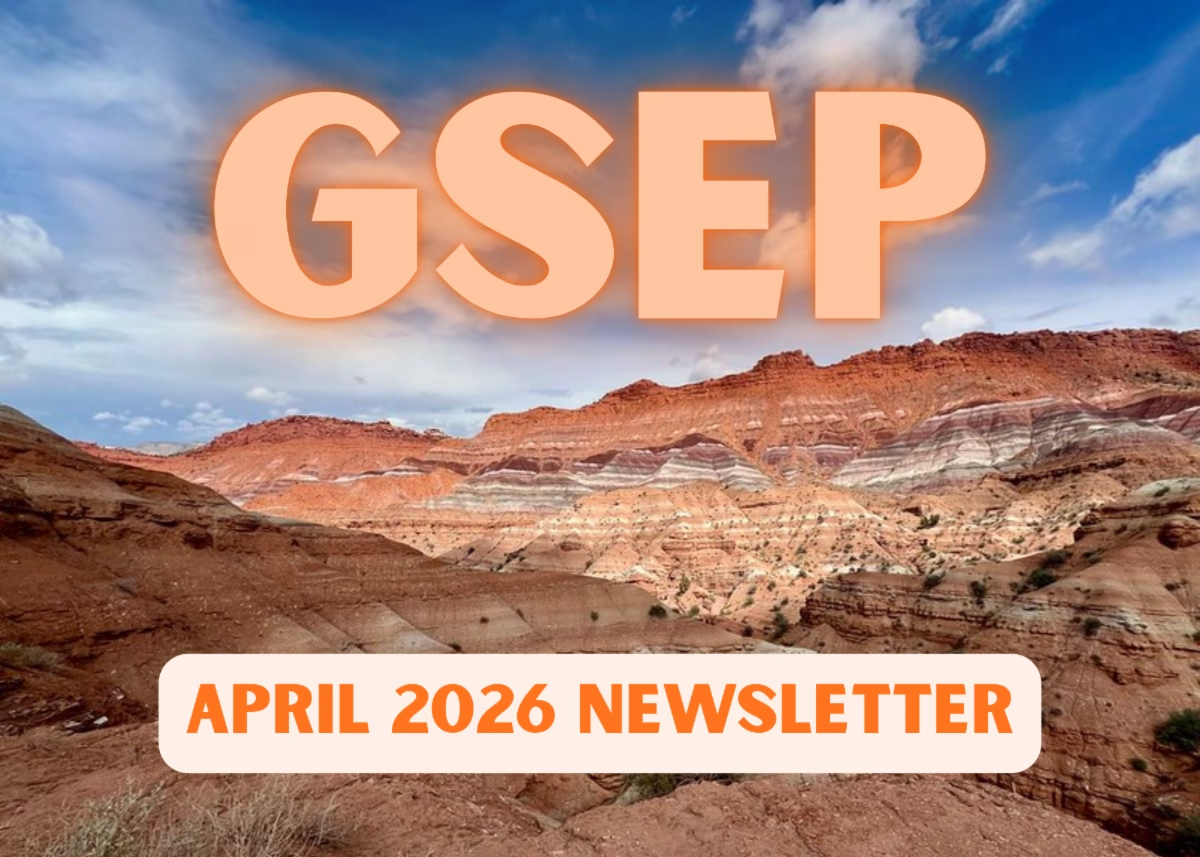
 The Paria townsite area on the Grand Staircase-Escalante National Monument is home to some incredible geology that reflects a past when water covered the area then receded or evaporated in cycles over thousands of years. These cycles of wetness and dryness laid the foundation for the layers of color we see today in sedimentary formations throughout the Monument. Photo provided by Jackie Grant, 2025. |
| It’s Earth Day! We will be partnering with the Xerces Society and joined by Hogle Zoo staff for bumble bee survey training this May 20, 21, & 22 in Kanab and Escalante, Utah. Visit the Bumble Bee Atlas Bioblitz page to register for your preferred date and location. Some of you may have received a slightly different version of this email yesterday, but I didn’t want any bumble bee lovers to miss out on the opportunity in May. You may be following the saga of the Congressional Review Act (CRA), and its potential to cause turmoil on the Grand Staircase-Escalante National Monument and public lands throughout the United States. As a refresher, the CRA is a congressional tool that can be used to remove certain kinds of agency-created “rules” without public input. Denying public input in itself is alarming, but the denial of public input is followed by a problematic prohibition on the issuance of any “substantially similar” rules by the agency. GSEP joined a large coalition to voice opposition to using the CRA against the Monument. You can hear some of my thoughts during an interview with @DuctTapethenBeer that was supported by businesses that belong to The Conservation Alliance. The CRA has the potential to remove protections on Federal lands that have been “withdrawn,” which means the lands are not available for new extraction projects. We just saw the CRA used to allow mining in the headwaters of the nation’s most visited wilderness, the Boundary Waters Canoe Area Wilderness. Grand Staircase-Escalante National Monument’s resource management plan is up next, with the possibility of a vote as early as the week of May 4. The Monument’s resource management plan (RMP) is a document that provides guidance on how to use the land while maintaining its integrity, value, and ecological functions. Thirty-four public and stakeholder meetings were held virtually and in communities around the Monument to gather feedback about the RMP before it was published. The Department of the Interior read and responded to all 13 “inconsistencies” submitted by the Utah Governors Office during the State’s privileged review of the RMP. Finally, an independent Grand Staircase-Escalante National Monument Advisory Committee (GSENMAC) was created to identify anything else that was missing from the RMP, and it consisted of representatives from the stakeholder groups below: Garfield County Kane County State Government Tribal Interests Education Developed Outdoor Recreation Conservation Private Landowners Dispersed Recreation Ecologists Paleontologists Archaeology It seems to be quite a stretch to claim that local communities were not heard after reviewing the efforts to which the Bureau of Land Management went to gather and document public input, science, data, and loudly voiced opinions. Public land should not be managed based on opinions. GSEP is deeply involved in the conversations around the CRA. We are working with other nonprofit partners to make information and perspectives available to the general public. We participated in a trip to Capitol Hill to speak with legislators about the purpose and importance of resource management plans. We are working very hard to identify how to keep protecting the land and water encompassed by Grand Staircase-Escalante National Monument – regardless of how the CRA is used. In the meantime, we continue to steward the land by picking up trash and pulling out invasive weeds; restore the land by removing non-native, habitat altering Russian olive trees; and conserve natural resources by collecting seeds for future restoration projects. Thank you for sticking with us, and do remember to celebrate Earth Day! -Jackie |