
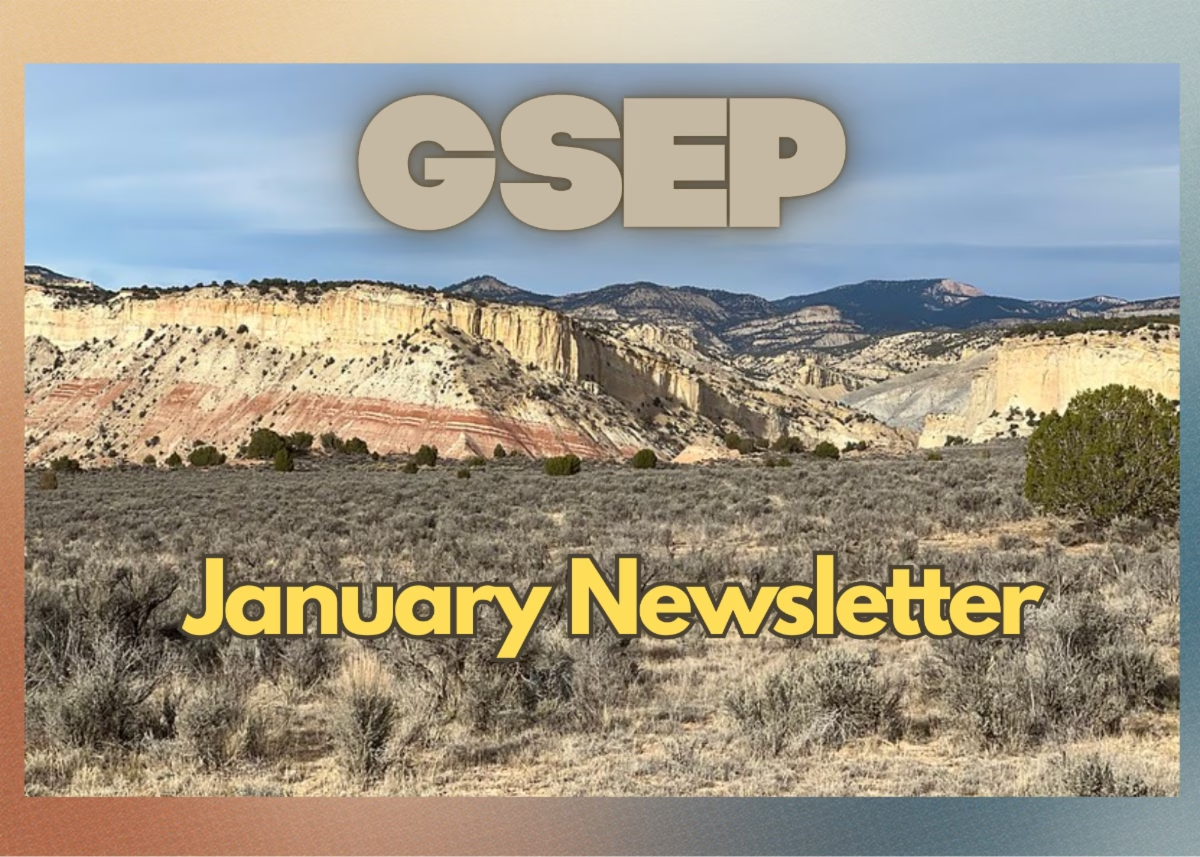
 Will this area near Grosvenor Arch still be part of the Grand Staircase-Escalante Monument at the end of 2026? Not if the Utah delegation has its way. Photo provided by Jackie Grant, 2025. |
| The news that we have been dreading has finally surfaced. The gambit to reduce or eliminate the Monument has been revealed. In a wonky policy move, Utah’s Rep. Celeste Maloy has opened the door to Congressional Review of the Monument’s 2025 Resource Management Plan (RMP). She did this by asking the Government Accountability Office to issue an opinion on whether or not the plan is a “rule.” If the plan is a rule then Congress can use the Congressional Review Act to rescind the plan. Even worse, once a plan is rescinded this way, no substantially similar plan can take its place. Why might we be so worried about this turn of events? There are a number of reasons. 1. Resource Management Plans guide all actions on monuments. Without a plan, decision-making gets thrown into chaos. Permitting becomes unclear, and may cause businesses of all kinds to suffer the consequences of unpredictability. Recent reports from Headwaters Economics show that communities around the Grand Staircase-Escalante National Monument and other national monuments show steady, predictable growth, which is much preferable to the typical boom and bust economic patterns seen in communities built around mining, oil, and gas. 2. If the Monument reverts to a previous plan, will it be the 2020 plan? Probably. The 2020 plan is concerning because it was written to manage a much smaller Monument that had been reduced by 861,974 acres, or about 47%! Would adoption of the 2020 plan come with another size reduction? This seems like a waste of taxpayer dollars given the cost of re-printing signs, brochures, and other materials related to the Monument. 3. What does “substantially similar” mean? There does not seem to be a clear definition. It could mean that no previous or future plan is acceptable because management needs are all essentially similar. In general, the Monument’s resource management plans all share key similarities such as: protection of Monument objects; zoning of various management areas throughout the Monument; an emphasis on scientific research; limited constraints on grazing, mining, off-road vehicle use in sensitive areas; and restoration of vegetation. Is this really just a disagreement about the number of acres in the Monument, or a play to extract resources? 4. Using the Congressional Review Act eliminates public input and makes other monuments vulnerable. Is this really the best way to treat one’s constituents? The 2025 plan considered the input of thousands of Americans, the Governor of the State of Utah, special interest groups, a Monument Advisory Committee that hasn’t met since 2024, and members of the original inhabitants of this land from multiple Native American Tribes. The thousands of hours of work that were put into the 2025 plan will be thrown out in a few minutes on the floor of Congress. I’ll be traveling to Washington, D.C. soon to advocate for the 2025 plan, and to ask about the implications of this decision for the Grand Staircase-Escalante and the rest of America’s treasured national monuments. In the meantime, keep calling Utah legislators to let them know what you think! Your calls do have an effect, as evidenced by a recent video released by Rep. Maloy’s office. Thank you for sticking with us, and all of your support. It’s worth it! -Jackie |